

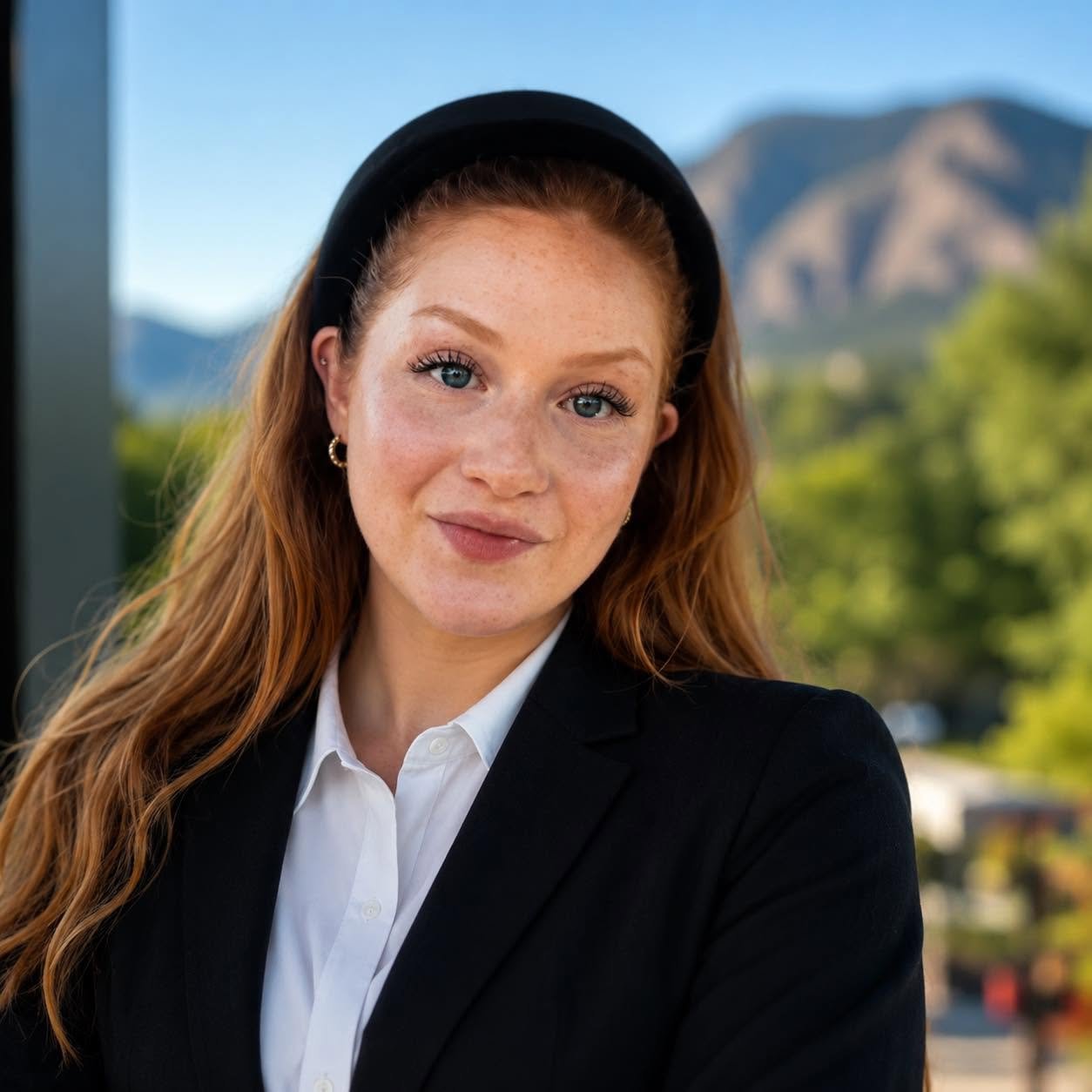
Hello! My name is Rachel Rose Isaacson.
I’m a Political Economist with a Master’s in Public Administration and Leadership, and I’ve spent over a decade working in politics and the public sector.
I have trained expertise in public budgeting, fiscal and policy analysis, and strategic resource management— skills essential for making responsible, transparent, and equitable decisions on City Council.
I’m an environmental educator, a soil advocate with Kiss the Ground, a pollinator ambassador with Cool Boulder, and serve as an Executive Board member of our local Sierra Club Indian Peaks Chapter—working at the intersection of climate and social justice.
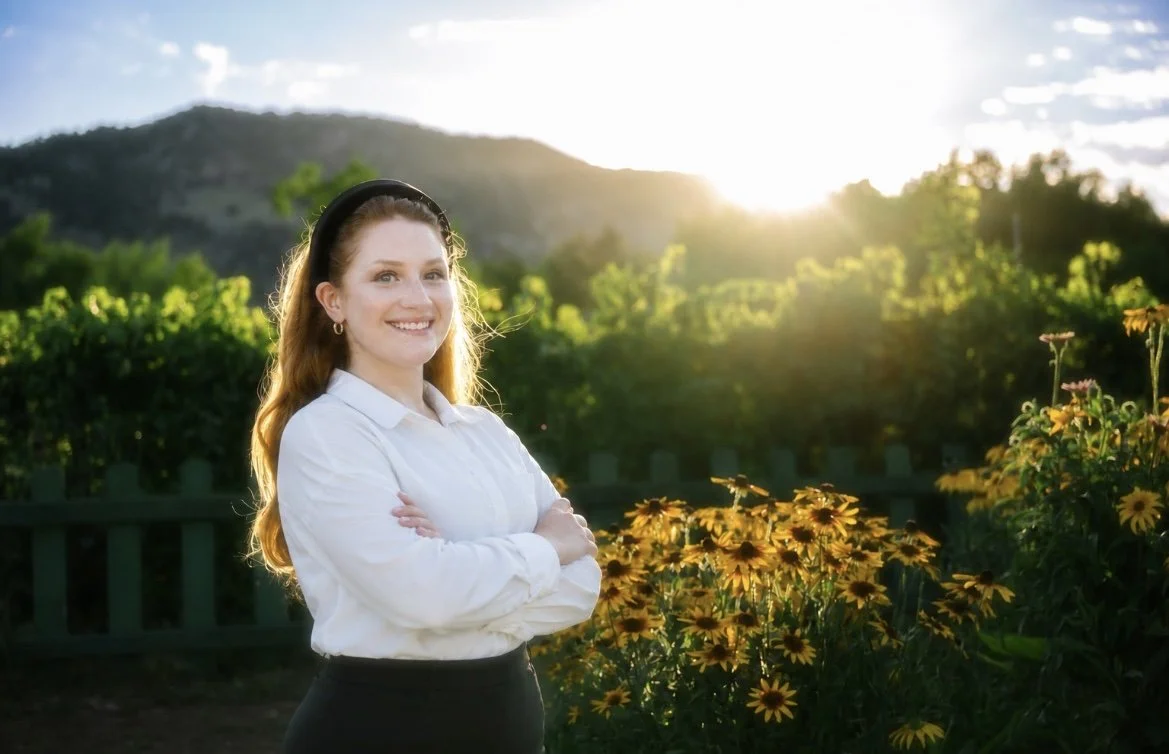
Why I am Running
Our community is facing rising cost of living, job instability, a structural budget deficit, and increasing wildfire risk.
These are complex challenges that require leadership to move beyond division to bring people together to make thoughtful, grounded, and transparent decisions.
I’m running for City Council to advance practical win-win-win solutions to our many challenges: strengthening climate and wildfire resilience, expanding housing affordability, and supporting the local businesses and culture that make Boulder vibrant.
I’m committed to helping build a Boulder where working people and their families can continue to stay in the place where we live, work, and love — for generations to come.

Wildfire & Climate Resiliency 🌿
-
We cannot ignore the urgent reality facing our community. Wildfires, floods, and droughts are everywhere around us, including right here in Boulder. We must act now to ensure the safety and security of our people and places.
I will make it a top priority for the city to invest in practical solutions to support a safer, more prepared, and more connected community in the face of growing climate challenges.
We need to invest in community-wide mitigation efforts, from shared defensible spaces and resilience hubs, to strengthening our emergency planning response and recovery.
-
We must face the facts: It’s only getting hotter.
This year, our state experienced its hottest March heat wave on record, with statewide temperatures nearly five degrees warmer than the previous record. More frequent and longer-lasting heat waves threaten older adults, outdoor workers, children, and residents without access to adequate cooling while also increasing energy demand and worsening air quality.
As extreme heat becomes more common, Boulder must invest in trees, shade, resilient infrastructure, cooling centers, and nature-based solutions that protect public health – particularly for residents and neighborhoods most at risk in these conditions.
-
“It shouldn’t be an existential crisis to take public transit” — Shoshana M. Lew, Director of Colorado Dep. of Transportation
Boulder has made progress in building a safer, more sustainable transportation system, but important gaps remain. Too many residents still struggle to access reliable public transit that fits the realities of their daily lives. When public transportation isn't dependable or accessible, it means more traffic on our roads, higher transportation costs for working families, and greater environmental impacts.
As our community grows and prepares to host events like Sundance, navigates rising fuel costs, and address aging infrastructure like roads, we need to create a transportation network that is accessible, modern, and resilient so people can move around town safely and efficiently regardless of whether they’re traveling to school or work, going to the farmer’s market, or evacuating in an emergency.
Economic Vitality 🤝
-
Boulder's Land Use Code (Title IX) should help residents and businesses adapt, innovate, and thrive while protecting the essential qualities that make our community unique and uphold our values.
Today, residents, nonprofits, and local businesses often face lengthy permitting timelines, unnecessary complexity, and high costs before they can open their doors, expand, or repurpose an existing space. This makes it difficult to adapt underutilized buildings for new uses, slows economic activity, and makes it harder for residents to stay in their homes.
We do not need to remove the height limit, build on open space, or turn every single-family home into a multiplex, but we must remove redundancy, contradictions, and unnecessary inefficiency.
-
Boulder's locally owned, independent businesses are spaces of belonging and are part of what makes Boulder a special place to call home.
Our small businesses also play a vital role in our city's economic health. Because Boulder relies heavily on sales tax to fund essential public services, the success of our local businesses is closely tied to the city's long-term fiscal resilience.
I support working in partnerships to expand access to equitable grants and technical assistance, investing in reliable utility infrastructure, and help our neighborhood business districts adapt to changing economic conditions. When our small businesses thrive, our workers, neighborhoods, and local economy thrive alongside them.
-
We should expand incentives that build a local ecosystem of fire-resilient businesses while making it more affordable for residents to protect their homes and slow rising insurance costs.
This includes tools such as rebates, grants, workforce development, and procurement policies such as grants or low-interest loans to start or scale home hardening businesses, fee waivers or reductions for fire-resilient contractors, and priority permitting for resilience-related work.
We also need to continue to expand wildfire prevention education, close high-risk public spaces during dangerous fire weather conditions, and continue undergrounding power lines and preventing power outages that negatively impact residents, nonprofits, and businesses.
Good Governance &
Fiscal Stewardship ⚖
-
Boulder is facing a structural budget deficit that cannot be solved through short-term fixes alone. Our financial challenges stem from a combination of factors: highly restricted revenues, TABOR constraints, our heavy reliance on sales taxes, increasing service demands, aging infrastructure, and rising inflation.
There are real budget constraints that we must acknowledge, especially in these challenging times. Meeting this moment requires disciplined and transparent leadership that avoids creating unnecessary ongoing obligations, regularly evaluates existing programs to ensure every public dollar is delivering meaningful and essential outcomes, and looks for opportunities to improve efficiency through cross-department collaboration, technological advancement, or operational improvements.
I believe that performance audits can help us objectively evaluate our finances and identify best practices to navigate these complex challenges to ensure we are making informed, data-driven decisions.
-
Boulder's infrastructure maintenance backlog did not develop overnight. In prior decades, the city grew its portfolio to 75 buildings without a comprehensive, citywide strategy for maintaining those assets over their full life cycle. The result is a portfolio of facilities that average 50 years old, have not been adequately maintained, and now requires significant reinvestment. The 15 most critical buildings alone will cost the city an estimated $400 million.
In 2020, the city completed its first comprehensive analysis of facility capital needs, and in 2021 adopted its first Facilities Master Plan, giving Boulder a data-driven roadmap for managing its buildings and reducing long-term maintenance liabilities by consolidating facilities, selling properties that no longer serve the community's needs, and strategically investing in the buildings that provide the greatest public value.
We must do all that is possible to avoid passing unnecessary burden from our historic lack of planning onto current residents who are already struggling with rising costs of living, while ensuring future generations can avoid the pitfall of deferred maintenance costs we now find ourselves in.
-
Colorado is facing an affordability crisis. Recent statewide polling shows that 76% of Coloradans are worried they may no longer be able to afford to live here. When families are stretching every paycheck to cover housing, groceries, childcare, insurance, and other essentials, we deserve confidence that our hard-earned tax dollars are producing measurable benefits.
As a working-class member of this community, I understand the real, on-the-ground kitchen table conversations that rarely reach council chambers, and the urgency of this moment for our council to take serious actions to address the serious economic challenges facing our community.
I will work with the intention and transparency these realities demand by setting clear priorities, evaluating programs based on outcomes, and being honest about the difficult tradeoffs our city faces and the impact of our choices on ourselves and future generations.
Housing 🏡
-
We need to address the housing gap by increasing truly affordable, attainable housing for all stages of life, including disabled residents, seniors, and low and middle-income families.
I support prioritizing rezoning and “redevelopment” for more low- and middle-income housing and creative solutions such as cooperatives, triplexes, ADUs, and tiny homes. I believe we need to work with and improve upon what already exists before we allocate funding and space for newer developments, which tend to be more expensive and less accessible for residents.
I believe in continuing to support and expand the work of organizations already providing affordable housing such as Boulder Housing Partners, while also holding accountability where improvements are needed. -
In my view as a Political Economist, homelessness is a well-documented symptom of systemic social, economic, and political breakdowns, not a reflection of individual failure, as it is too often framed.
I believe our approach must be humane, prevention-focused, and make the best use of our limited resources.
We must also ensure that we are keeping everyone in the community safe, our public spaces clean and accessible, and work hard to ensure services that address common underlying causes of homelessness and factors that cause many to re-enter homelessness.
I have outlined my approach to addressing homelessness on the page linked below ⤵
Learn More -
On City Council, I would strongly oppose any rollbacks or budget cuts to existing renter protections or support systems. I also support passing local ordinances that extend notice requirements for evictions in Winter months, rent increases, and work to limit unnecessary fees.
I also propose establishing a rental registry requiring landlords to report rent hikes, allowing the city to monitor affordability trends.
I also support a Tenant Relocation Assistance Ordinance which would support existing residents in cases of displacement when housing is demolished, substantially renovated/redeveloped, as well as in cases of no-cause/fault evictions and substantial rent increases.
Want to support the campaign?
Want to help bridge a new generation into Boulder politics? There are plenty of opportunities for your participation.
Whether it is joining #TeamRachel, volunteering, giving your endorsement, or making a donation.
All are welcomed and appreciated 🙌

Join our Newsletter



Political Endorsements
State Senator Judy Amabile
State Representative Junie Joseph
City Councilmember Nicole Speer
City Councilmember Rob Kaplan
City Councilmember Matt Benjamin
Former Boulder Mayor Will Toor
Former City Councilmember Mark Wallach
Formal City Councilmember Rachel Friend
Planning Board Member Mark McIntyre
Former Planning Board Member Bryan Bowen
Human Relations Commission Chair Aaron Gabriel Neyer